Signal Hill Boulevard is a residential boulevard in the Signal Hill community near Belleville, Illinois. SHBA is the volunteer association of Boulevard residents who help care for its public green space and organize events throughout the year.
Membership and participation
How SHBA works
Everyone who lives on Signal Hill Boulevard, including homeowners and renters, is considered a member of SHBA. Dues information is provided directly to Boulevard households, and only dues-paying members may vote on association business.
SHBA is a volunteer association, not a homeowners association. Annual household dues help pay for more frequent mowing and other upkeep, while residents organize events and seasonal decorating.
Getting involved
You can help with an event, decorate for a holiday, host a gathering, or offer a skill. SHBA can help connect you with other volunteers.
1904Signal Hill Park platted
Boulevard history
How Signal Hill Boulevard came to be
The Signal Hill Park addition was platted in 1904, the year of the St. Louis World’s Fair. The wide, divided Boulevard was laid out as the center of the new residential development.
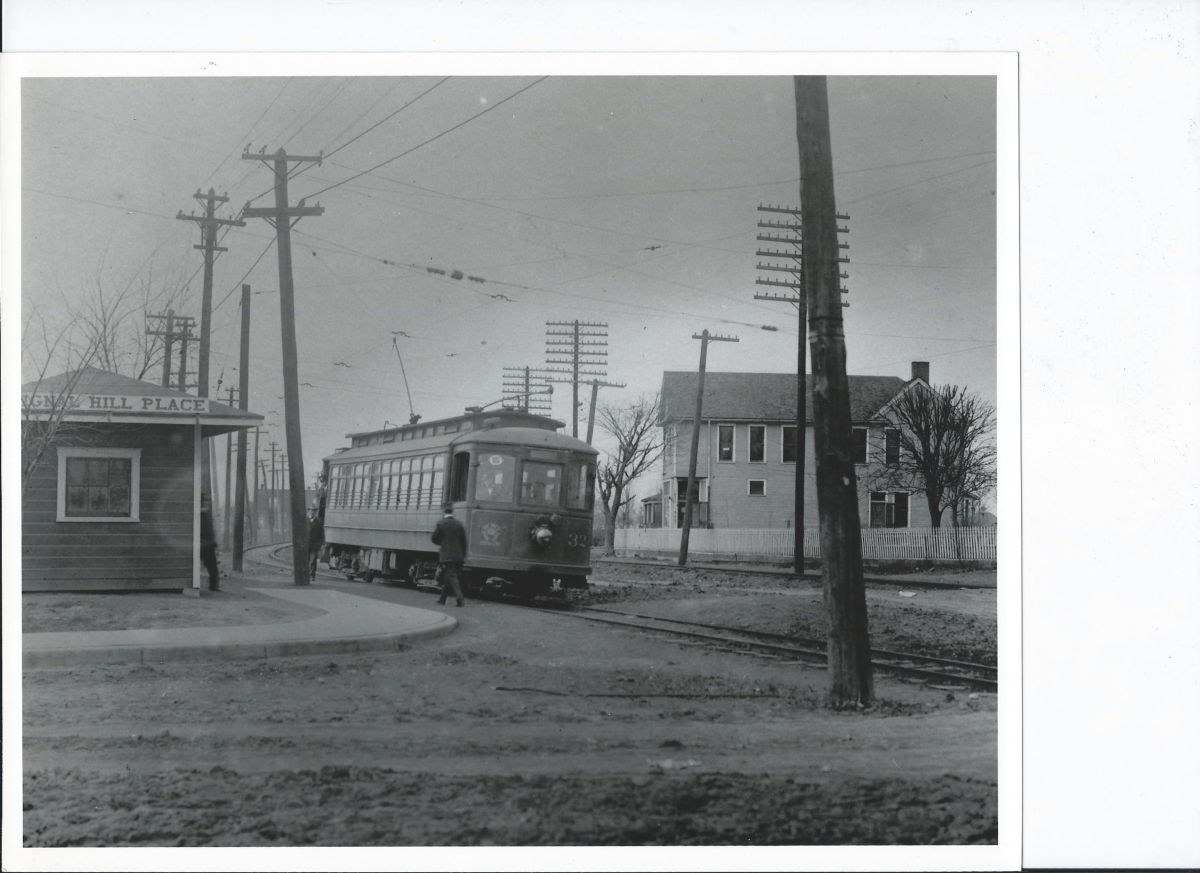
A trolley, workers, nearby homes, and the Signal Hill Place stop appear in this undated photograph.
View the original archive record ↗
Source: St. Clair County Historical Society, Metro East Streetcar Photographic Collection. Displayed in this preview while reproduction permission is pending.
1898–1899
The railway came first
Railway records show that the St. Louis & Belleville Electric Railway was built in 1898 and 1899, before Signal Hill Park was platted. An archived photograph identifies Trolley Car 32 at the Signal Hill Place stop.
Read moreShow less
The project was planned as a double-track electric railway between Belleville and East St. Louis. An Illinois Supreme Court opinion reviewing the line’s right-of-way records says grading was substantially complete by September 1898 and that the double-track railway was operating continuously and daily by May 1, 1899.
The line was therefore in service several years before Signal Hill Park was platted in 1904. The surviving trolley photograph shows that the railway was not simply nearby infrastructure: Signal Hill Place had its own named stop.
Signal Hill Methodist began as a community church in 1910, with early Sunday school classes held under the trees at Signal Hill School. A history of Belleville dates Signal Hill Lutheran Church to 1913 and lists it at 8100 West Main Street.
Read moreShow less
The Methodist congregation’s own heritage account describes those open-air Sunday school classes as the beginning of its community role. A published history of Belleville uses 1913 as the formal date for both Signal Hill Lutheran and Signal Hill Methodist, listing the Methodist church at 45 South 95th Street.
Taken together, the records show that organized church life was growing beside the school and the young Boulevard within the first decade after the neighborhood was laid out.
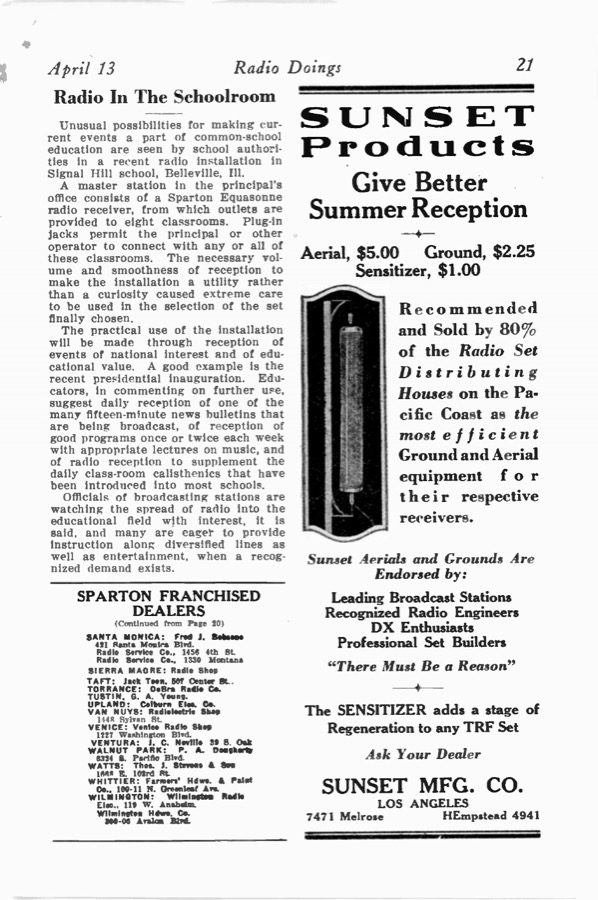
A national radio magazine featured Signal Hill School’s new classroom radio system. A receiver in the principal’s office was wired to eight classrooms, allowing students to hear educational programs and major live events. The article noted that students had recently listened to the presidential inauguration.
Read moreShow less
The system used a Spartan Equasonne receiver connected to speakers in each classroom. Plug-in jacks let the principal or another operator send a broadcast to any one classroom or to all eight at once.
The magazine described radio as a new teaching tool. It suggested short news broadcasts, selected programs paired with classroom discussion, music broadcasts, and other educational programs that could supplement daily lessons.
A 1940 Census Bureau map labels Signal Hill and shows its streets, nearby roads, and surrounding terrain. It is a clear snapshot of how much of the community had taken shape by the middle of the century.
Read moreShow less
The map identifies Signal Hill as Enumeration District 82-35. The Census Bureau divided the country into enumeration districts so that each area could be covered by a single census taker during the census period.
That practical purpose makes the map unusually useful today: it preserves the names and arrangement of local streets as federal census workers encountered them in 1940.
1940 Census enumeration district map · National Archives
1946
Residents form a fire district
After nearby cities said they would no longer provide fire protection outside their limits without annexation, Signal Hill residents organized their own volunteer fire department. Voters approved a taxing district to support it in July 1946.
Read moreShow less
East St. Louis had announced that its department would stop responding beyond the city limits. Belleville said it would serve nearby Country Club Place only if that subdivision joined the city. Signal Hill residents responded by creating a department of their own rather than choosing between annexation and no fire protection.
A Congressional Record tribute marking the department’s 60th anniversary said several hundred community members had volunteered over the years. It also credited Signal Hill with becoming Southern Illinois’s first department to acquire a thermal-imaging camera and the region’s first volunteer department to earn an ISO Class 3 rating.
Signal Hill Telecasting Corporation put WTVI on the air on August 10, 1953. The new UHF station used Channel 54, and its original studio and transmitter were built at 10200 West Main Street. The station later became KTVI.
Read moreShow less
WTVI was an early UHF station and only the second television station serving the St. Louis market. Its first broadcast was a benefit baseball game between the St. Louis Browns and Cincinnati Reds from Busch Stadium.
Network programs reached the station through an 11-mile microwave relay installed just days before sign-on. Baseball remained central immediately afterward: much of the station’s second day consisted of a Browns doubleheader against Detroit, separated and followed by short newscasts.
10200 West Main Street, then and now
Historical photo: St. Louis Media History Archive · Current image: Google Street View, May 2026
2002
Signal Hill School recognized
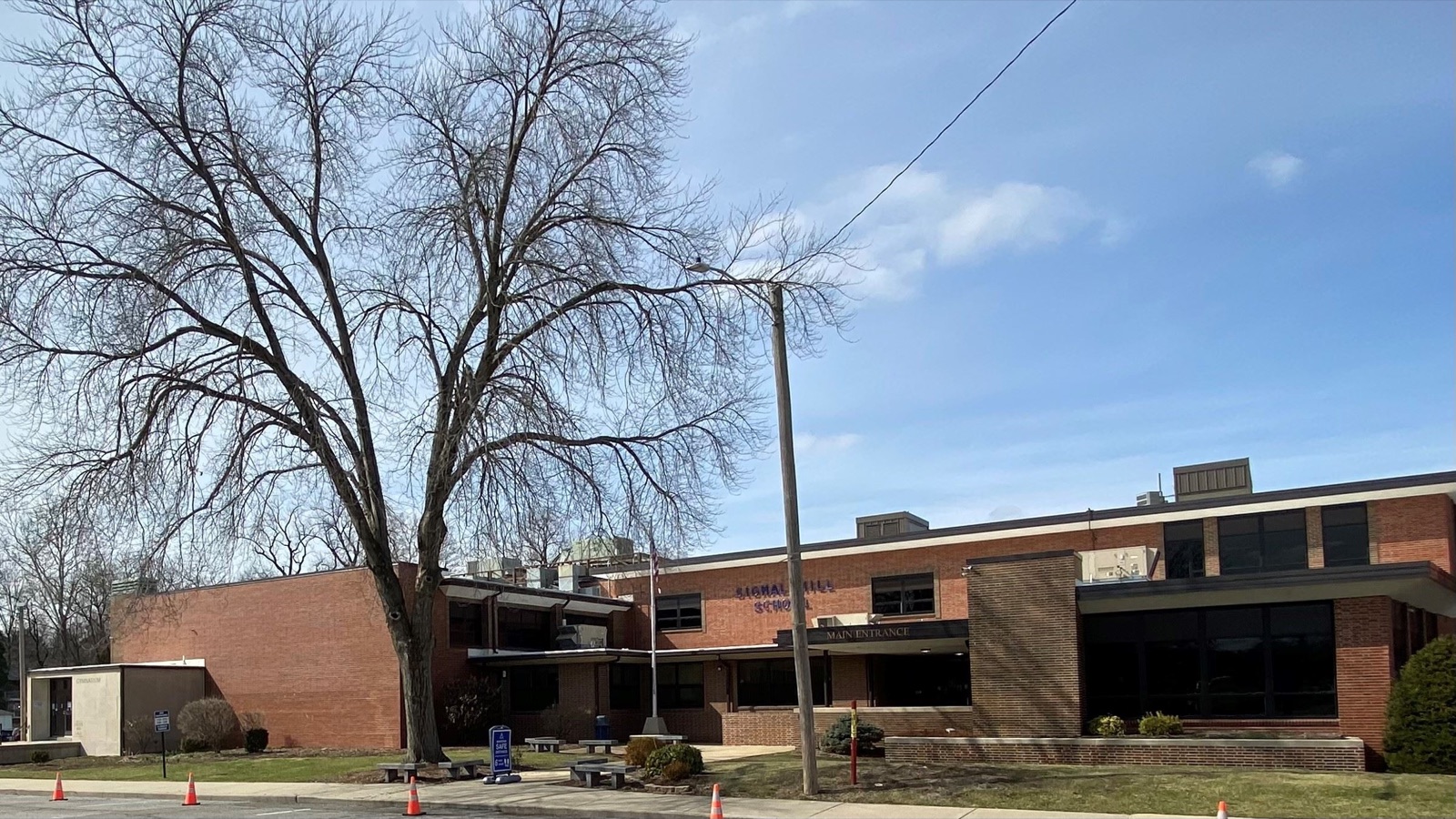
Signal Hill School principal Dr. Gina Segobiano was selected as Illinois's National Distinguished Principal. At the time, the school served 450 students from pre-kindergarten through eighth grade.
Read moreShow less
The program selected one principal from each state. Dr. Segobiano had led Signal Hill School since 1993 after spending the previous six years there as a fifth-grade teacher.
The Congressional Record credited her with helping develop the school’s technology program, starting character-development and Fight-Free programs, involving parents in their children’s education, and addressing the different needs of students across the district.
Signal Hill was named the area's first Get Up & Go Neighborhood in recognition of community efforts that encouraged healthy living.
Read moreShow less
The City of Belleville announced the recognition in its summer 2013 newsletter. The city’s comprehensive plan repeated it the following year while discussing neighborhood gardens as a way to improve access to healthy food and open space.
That plan also identified a Signal Hill Community Garden, connecting the countywide health recognition to a specific neighborhood project.
The Signal Hill Bike Trail opened in spring 2014. It follows Foley Drive and an abandoned railroad corridor from Wesley Drive to Signal Hill School, giving students a safer route to school and neighbors a new recreational trail.
Read moreShow less
The $350,000 project was owned by the City of Belleville and funded through the federal Safe Routes to School Program. Its purpose was twofold: provide students with a safer way to reach Signal Hill School and add a recreational path for West Belleville residents.
The finished route included a 12-foot-wide asphalt trail with aggregate shoulders and a signalized pedestrian crossing at Wesley Drive.
Signal Hill Boulevard was once County Highway 32. In 2016, St. Clair County approved a major reconstruction of the half-mile section from Bluff Drive to Superior Drive. The following year, the county transferred responsibility for the road: a short section went to the City of Belleville, while the stretch from Foley Drive to the city limit went to the Centreville Road District.
Read moreShow less
The county appropriated $1.1 million for the reconstruction. The approved work called for six inches of asphalt pavement over an aggregate base, along with concrete curbs, sidewalks, and related improvements.
In July 2017, the County Board unanimously approved separate resolutions removing the Boulevard segments from the county highway system. The small section around Belleville’s western city limit transferred to the city; the longer section from Foley Drive to that limit transferred to the Centreville Township Road District.
More than 200 people gathered in Signal Hill for a CommUNITY march focused on racial justice and neighborhood change.
Read moreShow less
The June gathering was held in solidarity with the Black Lives Matter movement and included singers, poets, and speakers who shared experiences of racial injustice in Belleville. Ten Signal Hill young people read short biographies of unarmed Black people who had been killed and asked the crowd to say their names.
Organizers said the location mattered because of Signal Hill’s own history. News coverage placed the march 27 years after a national 60 Minutes report examined racial tension between Signal Hill and neighboring East St. Louis, making the 2020 event a deliberate public response within the community itself.
Signal Hill includes parts of Belleville and unincorporated St. Clair County, so the agency serving a particular address can vary. These are the main schools and public-safety agencies connected to the Boulevard.
Schools
Signal Hill School District 181 serves local students from Pre-K through eighth grade. High school students from the Boulevard attend Belleville West in Belleville Township High School District 201.
Depending on the address, law enforcement is provided by either the Belleville Police Department or the St. Clair County Sheriff’s Department. Call 911 for an emergency.
The divided, grassy median runs from Superior Drive to Bluff Drive. The Signal Hill Boulevard road name and addresses continue south to Foley Drive.
The Boulevard is a public space. Everyone is welcome to walk, play, gather, and enjoy it. Boulevard residents do not own or control the space; through SHBA, they volunteer to help with its care and events.
SHBA is separate from the Signal Hill Neighborhood Association, which serves the broader neighborhood. The two organizations may work together when appropriate, but each has its own membership, finances, and responsibilities.